The MDK building: the main culture centre of Stalowa Wola
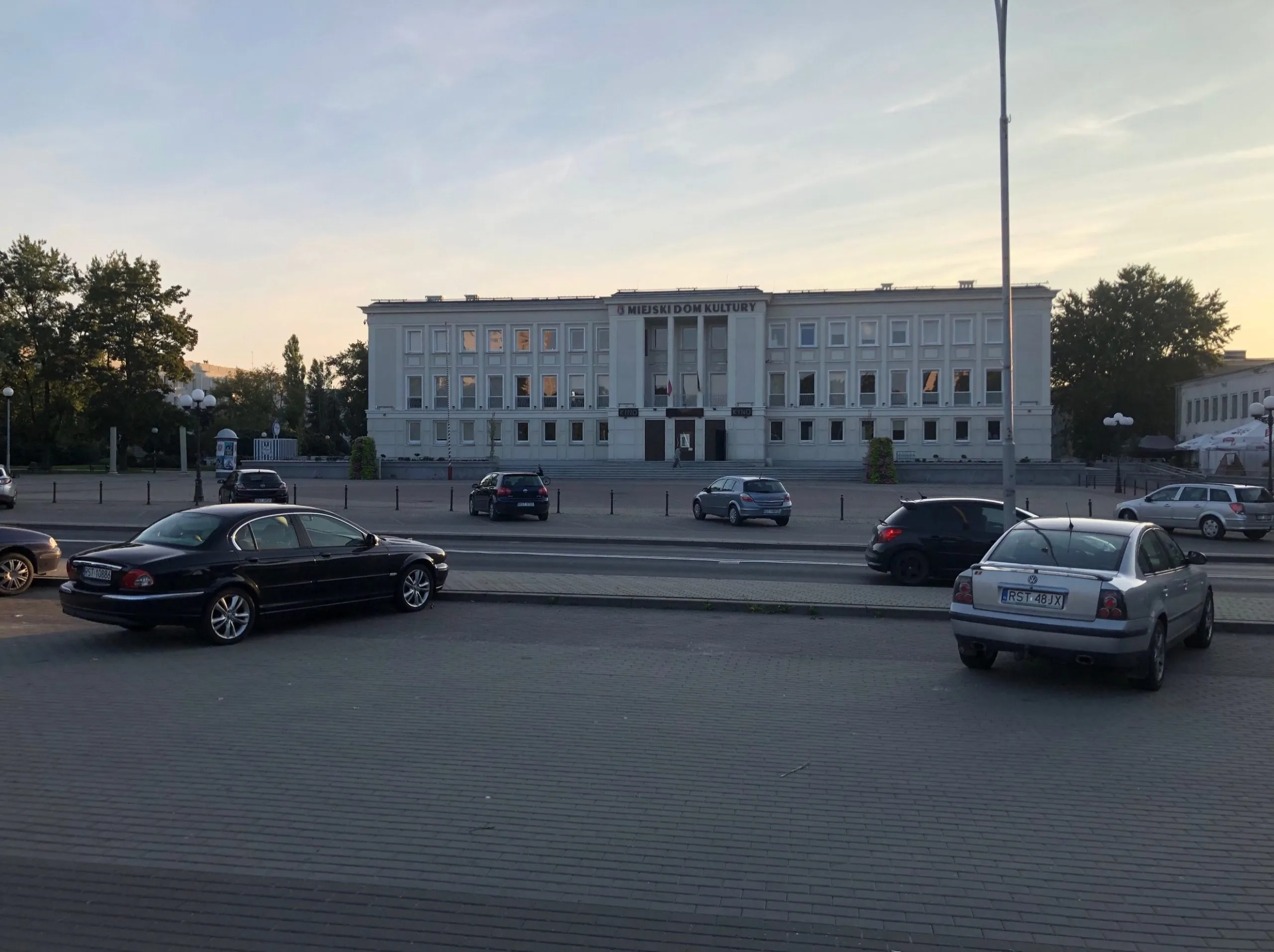
The building was constructed in the years 1949–1952 as the Culture Centre of the Stalowa Wola Steelworks. It is one of the few examples of socialist realist architecture in the city and has a significant historical value for the local community.
The Municipal House of Culture on Józef Piłsudski Square is the main centre for amateur artistic activities and a centre of education in culture and art for children and young people. Because of the great interest in its cultural education programme, it became necessary to improve the technical condition of the building.
After the completion of the planned renovation, conservation and installation works, the MDK has become an even more attractive cultural institution, with refurbished rooms and up-to-date systems that will provide better conditions for artistic and educational activities for the inhabitants of the city and the region. The following modernisation works have been carried out as part of the project: construction of a modern multimedia stage fitted with a trapdoor; rebuilding of a small cinema hall to meet the requirements of a music and theatre hall; renovation of the ballet hall, historic bas-reliefs, wall and ceiling decorations; and installation of new lighting. The building has also been adapted to the needs of people with disabilities, and appropriate solutions were used to improve its energy efficiency.
An important element of the project is the cooperation with the Norwegian partner, the INTBAU Norway association, and the exchange of knowledge in the fields of cultural heritage management, promotion of the values of traditional architecture, and increasing access to art, culture and education. Joint workshops, exhibitions and conferences are also organised as part of the project.
During the renovation works, beautiful wall decorations were discovered on the balcony of the auditorium, including a sgraffito with the inscription Stalowa Wola and symbols of the city’s coat of arms. These unique decorations had until then been hidden under the wainscoting, like other sgraffiti on the walls of the building.
The project strengthens the representative and tourist functions of the historic MDK and emphasises its timelessness and the richness of its art, while the cooperation with the Norwegian partner created space for learning from their experience in protecting local cultural heritage.
Olav Bjerve, board member of INTBAU Norway